
Written By: Conrad Winter | Jul 9, 2026, 2:13:06 PM
The most innovative showdown in transportation sales and marketing took place on the main stage of the 2026 ELEVATE Conference in Denver. There, industry leaders competed in the first-ever TMSA Tech Mic Drop Challenge, sharing practical and inspiring examples of how they are using AI.
The live event set the tone for an ELEVATE unlike any before. A new career-track-based format guided attendees through three days of firsts. Multimedia mixed with old-school storytelling and attendees wrestled with hot issues and the forever challenges of transportation, logistics, sales, and marketing.
Here are my ringside takeaways as a transportation and logistics content and copy writer and nine-year attendee of the conference.
Tech Mic Drop showcases the practical possibilities of AI and technology
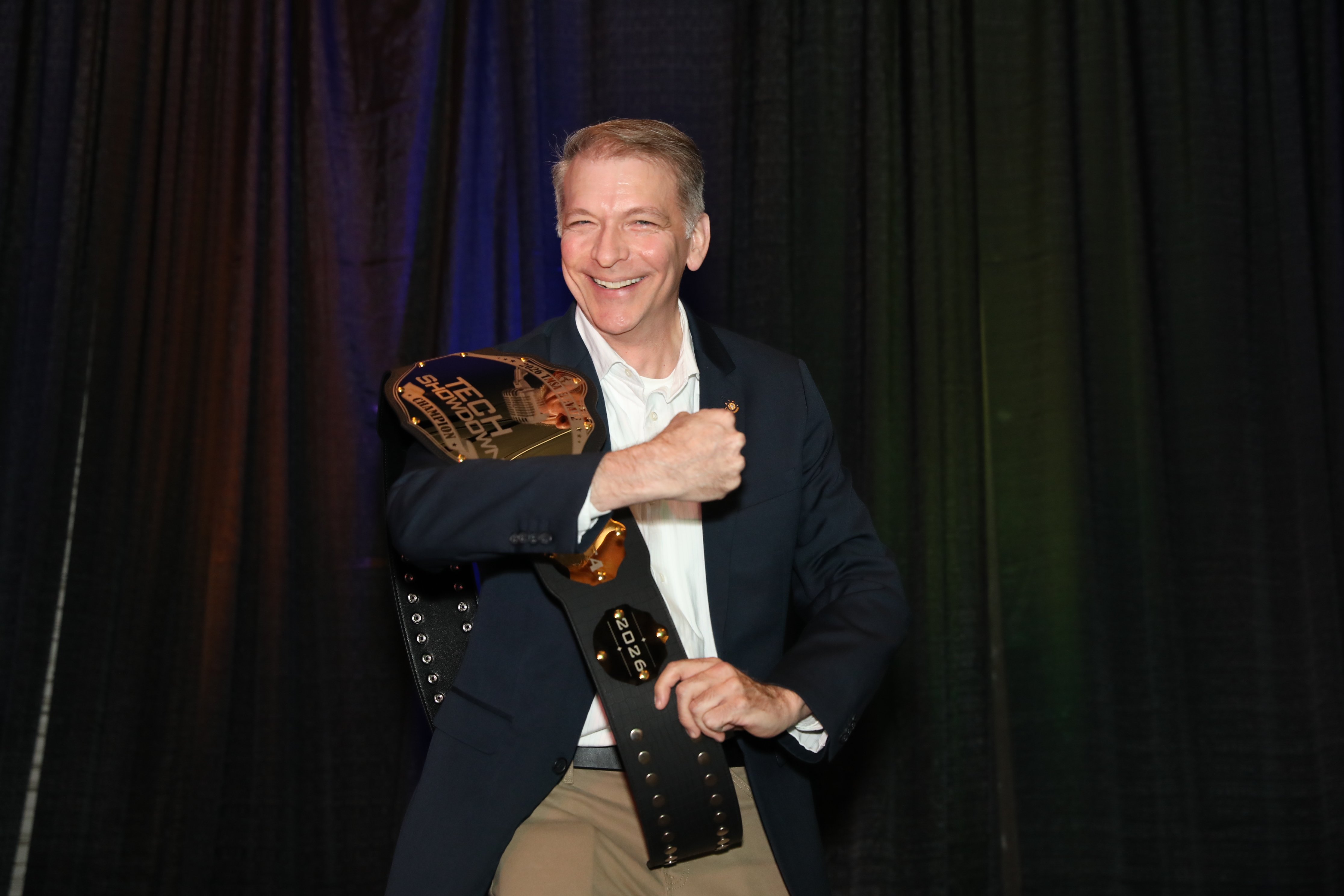
The opening session of ELEVATE was more than a competition; it showcased innovative AI applications in transportation and logistics sales and marketing. The winning presentation in the Tech Mic Drop Challenge by Jeff Price of JAXPORT demonstrated JAXPORT’s solution using AI-powered sales and intelligence for global trade.
JAXPORT’s solution revitalized an invaluable report that had been discontinued four years earlier because it was too complex, too large for Excel, and too time-consuming. The report took an analyst three weeks every time it ran.
JAXPORT’s solution used AI to extract business prospects with the most potential from a jumbled list of 2M shippers’ names. As a result of their successful initiative, years of reports now run in 30 minutes, revealing previously unobtainable names of companies who are new to JAXPORT and growing volume at JAXPORT, as well as those shipping through competing ports.
This last group of “conquest targets” was further refined to produce sales qualified leads representing over a quarter of a million dollars of potential business. JAXPORT’s AI solution didn’t take jobs, it enabled JAXPORT to do an invaluable job no one had time to do.
The feat was one of several AI initiatives that made JAXPORT the fan-favorite. A live poll after presentations by Price, Carly Gunby, VP, Revenue at Transfix and Bryan Ossa, Co-Founder & COO at Cartographer Consulting, named Price’s team the winner and wearer of a UFC-style championship belt crafted just for the occasion.
Intent strategy in full display at TMSA main event
Clara Flaherty, Co-Founder & Head of Growth at CarrierSource, returned to ELEVATE 2026 with the sequel to her 2025 ELEVATE introduction to intent data presentation. This year she imparted her frontline tips and insights into what to do with intent signals received.
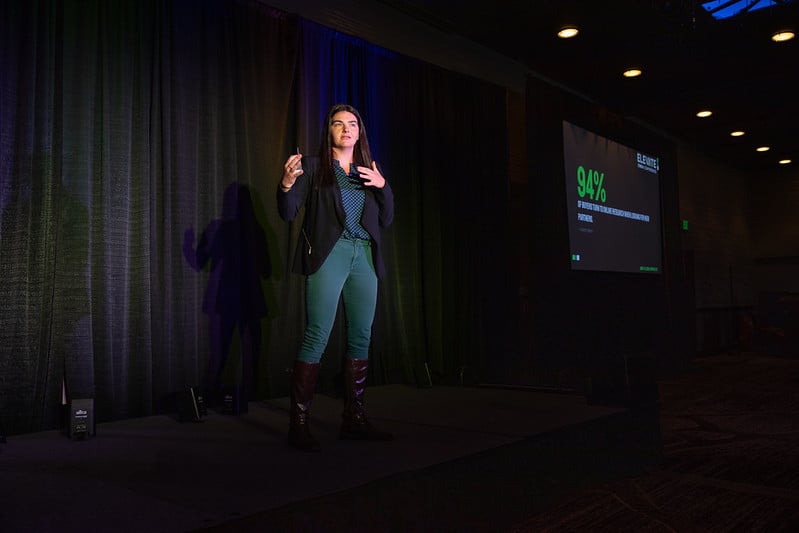
Not all intent signals are of equal value. Maximizing the use of intent data requires prioritizing signals, clarifying who owns leads (sales or marketing), and establishing standards for follow-up. Clara separated intent signals into three tiers (hot, warm, and cold) and outlined tactics, timelines and responsibilities for each.
Clara also demonstrated how retention is another key use of intent signals. Companies that receive intent signals that customers are researching competitors should be entered into an established process and cadence to prevent churn.
Clara’s prescribed timeline:
Supply chain resilience the toast of ELEVATE
New Belgium Brewing’s devastation during Hurricane Helene was something no one predicted. Neither was their successful recovery after six months.
New Belgium Chief Supply Chain Officer, Tom O’Connell, described the scene where during his first weeks on the job, he and his leadership team ventured behind National Guard lines to account for all employees, establish communications, deliver essentials, and initiate cleanup in the short timeframe while salvage was still possible. How O’Connell and New Belgium cared for their family of employees is the true story of how the brewery was able to overcome losing 25% of their network capacity and get deliveries to customers.
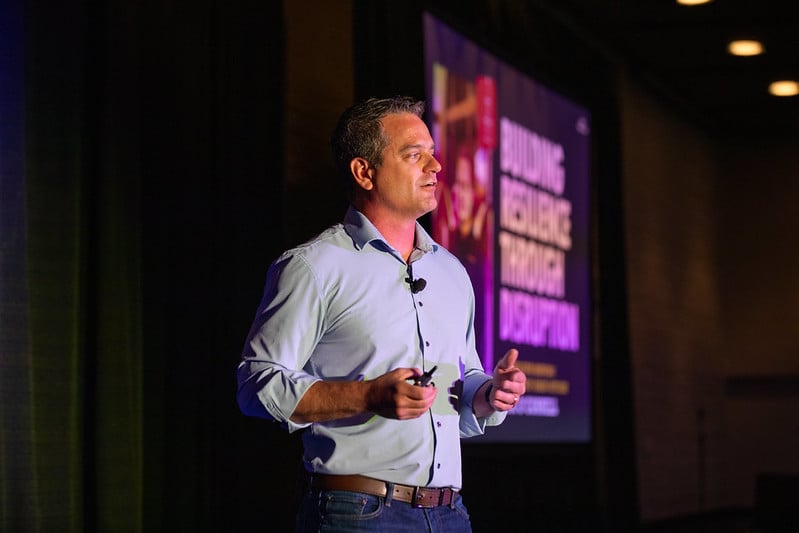
There were shining examples of people throughout the organization owning the challenges before them. From Fort Collins to New Belgium’s broader network, coworkers rallied to absorb production shifts, rebalance distribution, and keep beer flowing while Asheville recovered.
Their collaboration and commitment is a model for how an agile leadership team, a strong distribution network, and a people-first philosophy can achieve the logistically impossible. Relationships played a big role in New Belgium’s success. Even competitors came to the brewery’s aid. It’s an important theme in the industry today as shippers facing rising carrier rejections and rates rethink transactional practices.
Ownership and commitment remain the soul of success
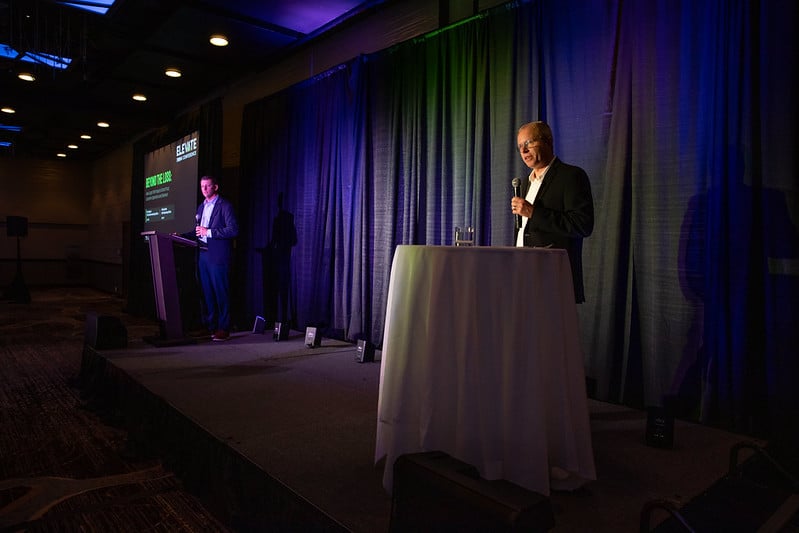
Extreme ownership was a theme of Jarrett’s presentation on freight fraud. Jarrett Chief Operating Officer, Mark Gordon and Chief Sales and Marketing Officer, Matt Wagner stressed accountability and consistency as program requisites for successful fraud prevention and customer-centric damage control. Continuous oversight by someone who can and will question shipment anomalies is key. In the event of an incident of theft or fraud, consistent involvement and transparent communication is what customers need. They shared that even when there is no news, reporting that there is no news helps reassure customers.
Trust Is built through transparency and accountability
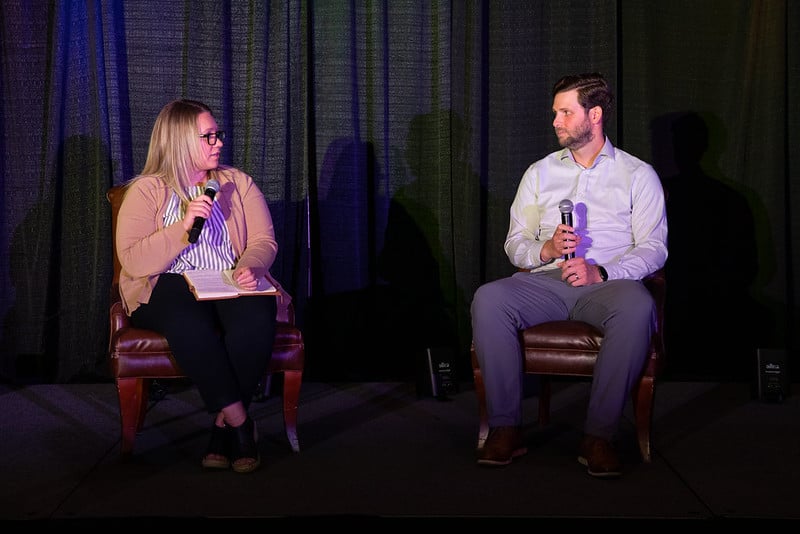
Rick Wood, Manager of Global Transportation at Leprino, who headlined this year’s Shipper Fireside Chat stressed the importance of trust and the need for carriers to admit their mistakes. “It’s transportation. We know things go wrong. Just let us know.” He says when carriers are up front about exceptions, it enables Wood’s team to leverage their resources to help solve problems. Trust extends to contracts. He expects carriers to hold up their end of the bargain the same way that Leprino does. “We never go back to carriers mid-RFP and tell them they have to drop their rates.” He says tender acceptance along with OT are the KPIs they scrutinize the most now with carriers.
Star-studded economic panel offers up gems
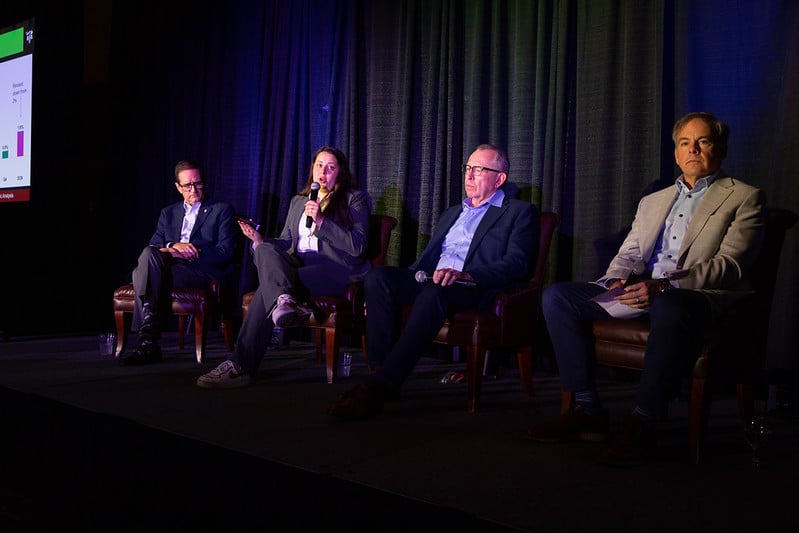
Lee Klaskow, Senior Analyst at Bloomberg Intelligence pointed out transportation has outperformed the general market over the past 12 months. The fact that the market sees a bright future for trucking rounds out other good news for transportation providers in the areas of rising rates and tightening capacity.
The good news story is more complicated, though, according to Dean Croke, Principal Analyst at DAT Solutions and Lindsay Bur, Director of Data Science & Economics at American Trucking Associations. They both discussed how this year’s supply-driven capacity constriction is unusual and will increase pressure for shippers in the near term.
Among the reasons, Bur points out that English language proficiency violations are now out-of-service violations. That removed 18,000 drivers from the market in 2025 and so far in 2026. Additionally she pointed out that the number of employee drivers is down almost 10% since the 2022 high. Efforts to attract newer, younger drivers through the new driver apprentice program have failed, she adds. Bur and Croke agree the interstate focus of the program is a deal-killer for young people who want to be home every night.
Croke also commented on what he refers to as “the great recredentialling” taking place in trucking. He sees the entry gate for drivers to the market closing and capacity shrinking as the driver pool is permanently re-credentialed. He points to the largest enforcement against commercial driver training programs in FMCSA history as proof. He warns that this restriction of the driver pool will have a permanent impact. He believes that the move will soon put shippers in a situation of being hard pressed to find carriers at any price.
TMSA court of opinion weighs in on Montgomery ruling
The recent Supreme Court ruling was major news that has multiple business implications. In essence, the ruling found that freight brokers can be held liable for negligent selection of unsafe motor carriers. TMSA gave the heavily-discussed topic a last-minute slot on the main stage and industry experts weighed in through pre-recorded perspectives on the significant impacts and implications.
Matthew Leffler, Supply Chain Lawyer, aka, The Armchair Attorney®, sees a rush for liability insurance by freight brokers ahead. This will be a big expense that could increase brokers’ costs two-to-four times, he said. He also said that, now that brokers may face liability related to their carrier-selection decisions, it’s only a matter of time before shippers themselves face the same risk.
Rob Light, CEO and Co-Founder of CarrierSource says that as a result of the ruling, brokers need the foundation for a sound sourcing process and that the process needs to be documented very thoroughly. In the post-Montgomery environment just looking at CSA scores isn’t enough to adequately vet carriers, he says. Brokers need to see peer reviews like those displayed on CarrierSource. He says reviews regarding carriers’ reliability and on-time performance are clear indicators of who will be reliably safe.
Michael Caney, Chief Commercial Officer of Highway sees this post-Montgomery period as a time for transportation intermediaries to thrive. He believes this is a great time to shine as a freight broker by adopting high standards of safety and fraud prevention.
To get there Caney says brokers need to scrutinize their safety standards for how they evaluate carriers and be more consistent in ways they weren’t before. He lists a great data partner, thorough audit trail, and advanced carrier identification capabilities as broker essentials post-Montgomery. All this means more cost and effort for brokers. On the upside, Cany suggests that brokers take the opportunity to have an intelligent and transparent pricing conversation with shippers about the type of carriers they need to hire and what it will cost.
Trade shows and the KPIs that really matter
Trade shows provide invaluable opportunities to have meaningful interactions, gauge market sentiment, and as Mackenzie Hill, Sr. Marketing Coordinator at JAXPORT and Ash Thoms, Sr. Trade Show and Events Manager at ITS Logistics put it “build relationship infrastructure.” They are rare and valuable opportunities, but their results and ROI are perennially hard to pin down.
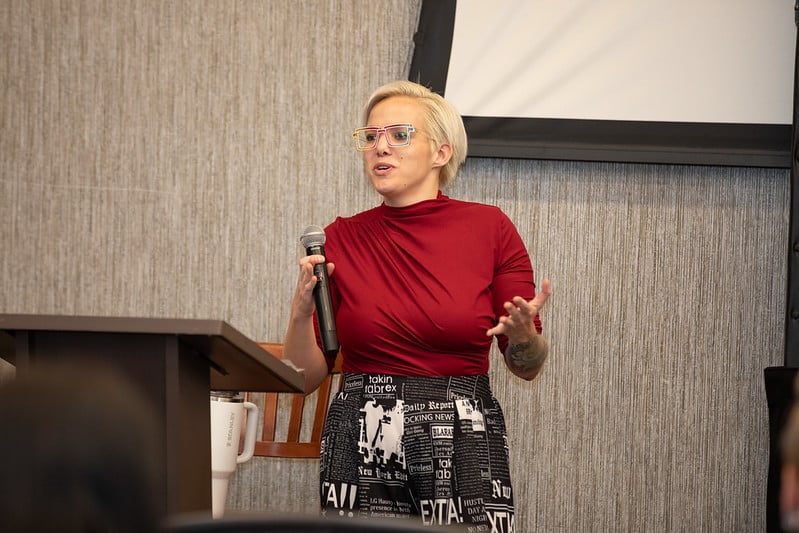
Ash and Mackenzie’s presentation laid out the most meaningful metrics to measure and the best ways to present findings to the people who will determine the budget for the next big show.
Closed revenue is an unrealistic measurable and badge scans are meaningless, they say. Instead of these traditional KPIs, Ash and Mackenzie suggest focusing on the touches that it takes close a transaction. It takes an average of 27 touches to close a deal today, they said.
They recommend sales and marketing agree on specific goals before the show. For example: 10 quality meetings, three reconnections, one on-stage moment, or one specific customer visit to the booth.
Trade show teams should aim to advance a known number of touches, but Ash and Mackenzie also say to record instances of things like target account presence, referrals, and tangential events. Teams should also have a means for gauging brand sentiment, rating conversations and recording quotes overheard. Their advice is if it happened at the show and you didn’t write it down, it didn’t happen.
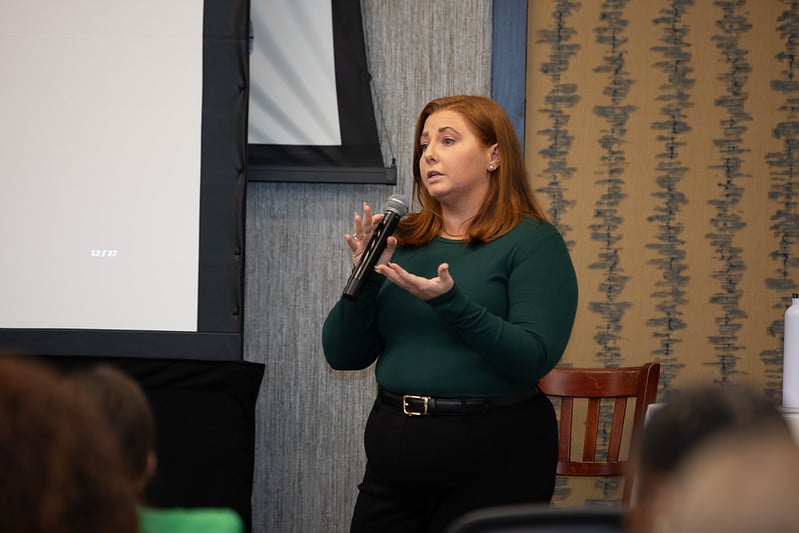
When it comes to reporting event results, Ash and Mackenzie’s experienced-based advice:
Video Gets a Close-Up
Terry Nawrot, Co-Founder and CEO at VideoRequest and Michelle LeBlanc, Founder of Drop & Hook shared the keys to capturing video gold, efficiently producing videos in bulk, and repurposing the heck out of what you’ve filmed. Highlights included work for Performance Food Group that showed how asking simple, direct questions captured authentic voices from employees in an ambitious multi-location employer branding campaign.
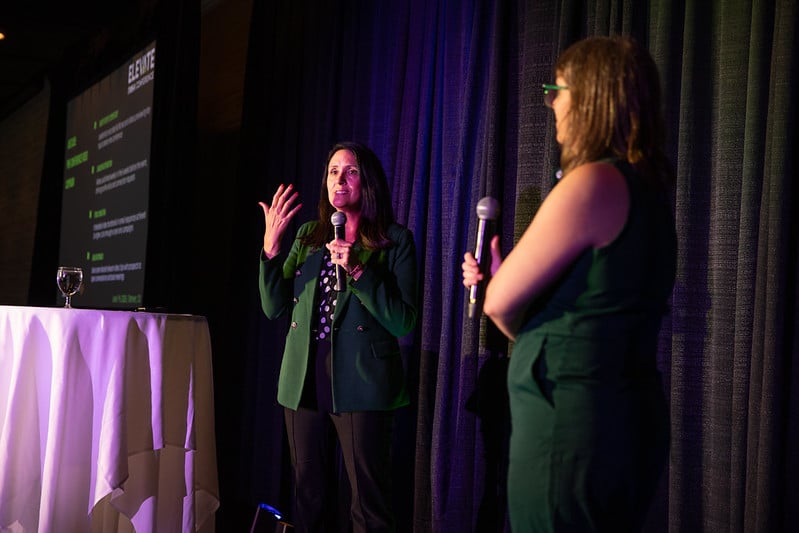
Work for IMC Logistics demonstrated video being used for thought leadership, brand awareness, and driver recruitment. By boosting traffic to key website pages 400% and attracting 800 additional driver recruitment leads, they showed how video doesn’t have to be big budget and slickly produced to be effective.
Terry and Michelle stress that time, extraordinary effort and money aren’t required to create authentic and appealing video. They showed how transportation and logistics companies can get started with limited resources. They even demonstrated how AI hosts are now being used to reduce the barriers to authentic people-driven video even more.
One final takeaway
For years it seems like AI content has mostly alternated between man-versus-machine and who makes the best AI tool. It was refreshing to see companies using it to do the humanly impossible (JAXPORT) and coax humanity into video (Drop & Hook and VideoRequest).
One of my moments of inspiration came during the morning walks with fellow ELEVATE attendees. Liza Twery McAngus, Director of Marketing at Sunland Logistics Solutions shared that she sees AI and LLM the same as canvas and paint. Artists use the same materials, but the potential directions and outcomes are infinite.
What will we use AI for next? Count on TMSA to help lead the way.
Note: These presentations and many more are available on the TMSA Member Portal. If you’re not already a member, it’s a great reason to join right now.
ABOUT TMSA
The Transportation Marketing and Sales Association (TMSA) is the only organization exclusively focused on the business development needs of the transportation and logistics industry. TMSA provides professional development, industry research, networking opportunities, and recognition programs that help sales and marketing professionals advance their careers and drive business growth.
By Michael Cardwell, President, Digital Brew As an affiliate member of TMSA, we at Digital Brew know how chaotic the essential supply chain industry can get, even without a pandemic sweeping the...

By Conrad Winter, a campaign and content copywriter for the transportation and logistics industry. He is a TMSA member and will be exhibiting at the upcoming TMSA Logistics Marketing & Sales...